



Quality Treatment With Super Affordable Price
Best Physiotherapy Treatment India

Call us anytime
Write a mail
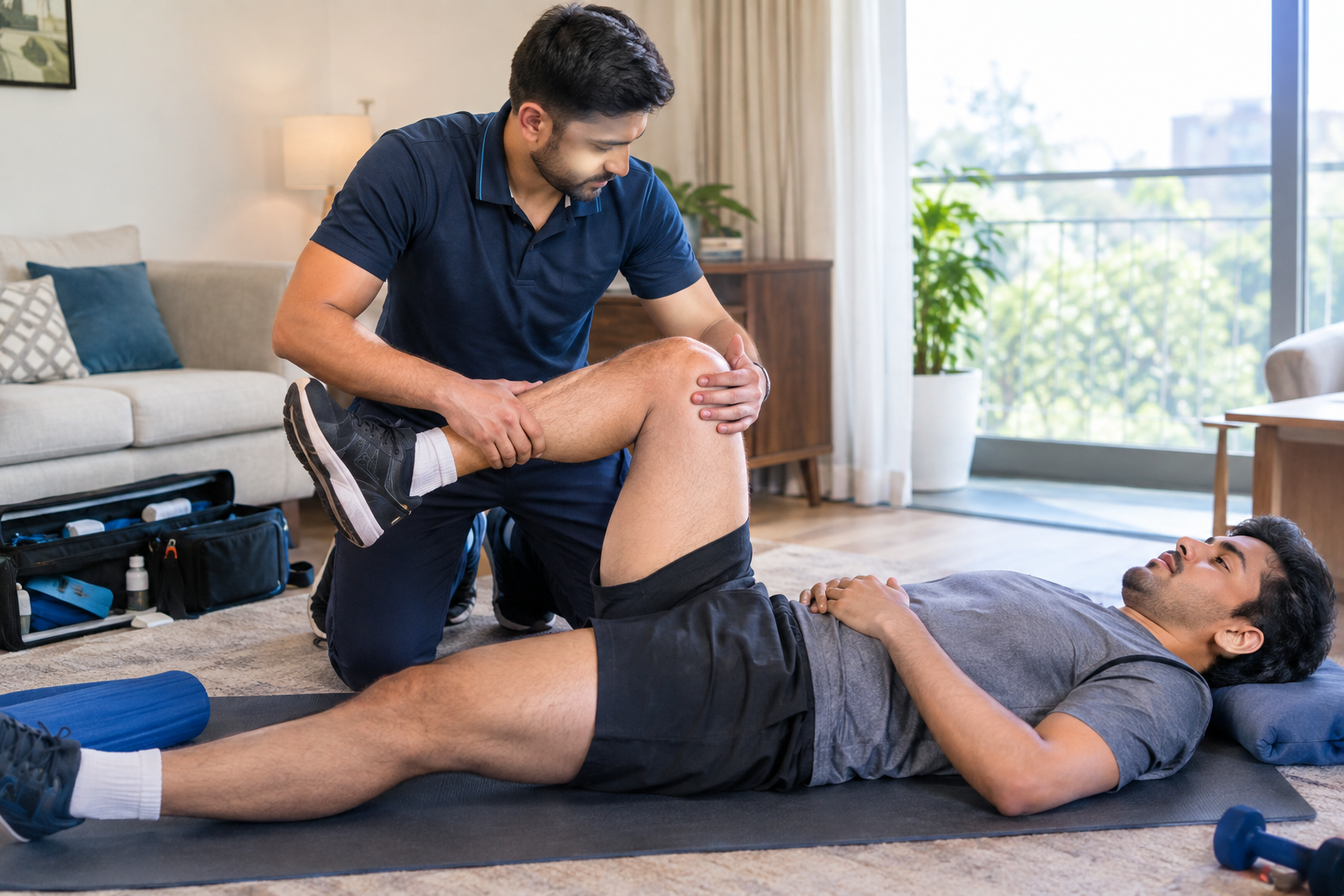
Nobody plans for an injury. One morning you’re fine, the next you’re limping around the house wondering how long this is going to set you back. Maybe it’s your knee. Maybe it’s that shoulder that’s been bothering you for months and finally said enough. Whatever it is, the last thing you want to do is sit through Gurgaon traffic just to get to a clinic. That’s exactly why more people are turning to the Best Sports Physiotherapist in Gurgaon to come to them instead. Why Choose Physiotherapy Treatment at Home in Gurgaon? Think about how a typical clinic visit actually goes. You block out most of your afternoon, battle the commute, wait around longer than expected, and then finally get your session — by which point you’re already tired and a bit frustrated. Physiotherapy treatment at home in Gurgaon just removes all of that. Your therapist arrives, you’re already relaxed, and the whole hour is actually spent on you getting better. There’s another thing worth mentioning here: consistency. Recovery doesn’t happen in one session — it happens over weeks of showing up regularly. When there’s no travel involved, people skip appointments a lot less. And that steady, uninterrupted rhythm? That’s often what separates a full recovery from one that drags on longer than it should. Also Read: Best Physiotherapy Clinic in Gurgaon: How to Choose the Right Treatment Centre Home Physiotherapy in Sector 49 Gurgaon — What to Expect Your first Home Physiotherapy in Sector 49 Gurgaon session isn’t all that different from a clinic visit — it just happens in your living room. Your physiotherapist will take the time to properly understand what’s going on: how the injury happened, how it’s affecting your movement, what your day-to-day looks like. From there, they build a plan around you — not around a standard template. Depending on what you’re dealing with, sessions might include: A good Home Physiotherapist in Sector 49 also makes sure you leave each session understanding your own body a little better — what triggered the problem, what to watch out for, and how to keep it from happening again. What Are the Benefits of Hiring a Home Physiotherapist in Sector 49? Beyond convenience, there are some real clinical reasons why home physiotherapy works well. Here’s what tends to matter most: 1. Personalized AttentionIn a busy clinic, your therapist might be keeping an eye on two or three people at once. When they’re in your home, you get their full focus for the entire session. That kind of attention adds up over time. 2. Faster RecoveryWhen treatment is adjusted in real time based on how you’re actually responding — not how a textbook says you should — things tend to move quicker. A good therapist reads what they’re seeing and adapts. That’s harder to do when they’re stretched across multiple patients. 3. Safe and Comfortable EnvironmentFor anyone coming out of surgery, dealing with limited mobility, or genuinely struggling to get around, a home visit takes real pressure off. You’re not risking extra strain just to get to your appointment. 4. Flexible SchedulingInjuries don’t care about your calendar, but your physiotherapist should. Most home physio providers in Gurgaon offer early morning and evening slots, so you’re not forced to rearrange your whole week. 5. Continuity of CareWorking with the same person over time makes a genuine difference. They know your history, they notice small changes, and they can shift the plan when something’s working or when it isn’t. That’s the kind of care that’s hard to replicate when you’re seeing someone new each visit. Finding the Right Sports Physiotherapist in Gurgaon Sports rehabilitation is its own specialty. Someone great at general physiotherapy might not have the depth of experience needed for athletic injuries, performance-related issues, or getting someone back to high physical demand. The Best Sports Physiotherapist in Gurgaon will know the difference — and will have the case history to back it up. Ask real questions before you book: Have they treated your specific type of injury? Do they bring the right equipment for home sessions? How do they measure progress and adjust? Word of mouth still goes a long way here — if someone you trust has had a good experience, that’s often the most reliable signal you’ll get. Get Expert Home Physiotherapy in Sector 49, Gurgaon Recovering well and recovering comfortably aren’t mutually exclusive. With the right Home Physiotherapist in Sector 49, you get proper, professional care — just without the commute. If you’re based in or around Sector 49, Gold Medal Physiotherapy is a solid place to start. Their team of experienced sports physiotherapists provides home physiotherapy services across Gurgaon, tailored to your condition and schedule. Head over to goldmedalphysiotherapy.com to book a session or find out more about how they can help.
Let’s be honest — getting to a physiotherapy clinic when you’re in pain is one of life’s little ironies. The more you need treatment, the harder it is to get there. That’s why more and more people in Gurgaon are choosing home care physiotherapy in Gurgaon instead. No traffic, no waiting rooms, no dragging yourself out of the house on a bad pain day. Just a qualified physiotherapist who comes to you, assesses your condition, and gets to work. And it’s not just about convenience. There’s real clinical value in receiving treatment at home — your physio can see how you actually move in your own space, catch compensations you’ve built up without realizing it, and tailor every session to your specific environment and routine. Sports Physiotherapy Treatment in Gurgaon Sport is tough on the body. Whether you’re a competitive athlete or someone who runs on weekends and plays badminton with colleagues, injuries happen — and they tend to happen at the worst possible time. Sports physiotherapy treatment in Gurgaon goes beyond just treating the injury. A skilled sports physio will ask the harder question: why did this happen in the first place? A recurring hamstring pull might trace back to a hip weakness. Chronic knee pain might be rooted in poor foot mechanics. Getting to that root cause — and fixing it — is what turns a temporary fix into a lasting one. Doing this at home means you’re not losing recovery days to travel, and you’re far more likely to stay consistent with your sessions. For athletes, that consistency is everything. Also Read: Best Sports Physiotherapist in Gurgaon for Home Physiotherapy in Sector 49 Orthopaedic Physiotherapy Treatment in Gurgaon You don’t have to be sporty to need physiotherapy. Millions of people deal with arthritis, chronic back pain, post-surgical stiffness, and orthopaedic conditions every single day — and many of them are the ones who benefit most from home-based care. Orthopaedic physiotherapy treatment in Gurgaon is methodical by nature. It starts conservatively, builds gradually, and adapts constantly based on how your body is responding. After a knee replacement or spinal procedure, the last thing you need is to strain yourself getting to a clinic. A physio who visits your home can observe how you’re coping with daily tasks — standing up from a chair, climbing stairs, walking down a hallway — and adjust your program accordingly. That kind of real-world observation simply doesn’t happen in a clinical setting. Manual Therapy in Gurgaon Sometimes the body needs more than exercises. Stiff joints, tight muscles, and restricted fascia can hold back your recovery even when you’re doing everything else right. That’s where hands-on treatment makes a genuine difference. Manual therapy in Gurgaon includes techniques like joint mobilization, soft tissue release, and myofascial work — all delivered by hand, all tailored to what your body needs at that point in recovery. It’s particularly effective for frozen shoulder, lower back stiffness, and tightness following fractures or surgery. When you’re getting manual therapy at home, sessions can fit around your schedule rather than the other way around. And since recovery depends so heavily on treatment frequency, that flexibility matters more than people often realize. Start Your Recovery with Gold Medal Physiotherapy The right recovery isn’t something that just happens — it takes consistent effort, expert guidance, and a treatment plan built specifically for you. Gold Medal Physiotherapy offers professional home-based services across Gurgaon, including sports physiotherapy treatment in Gurgaon, orthopaedic physiotherapy treatment in Gurgaon, and manual therapy in Gurgaon. Their physiotherapists don’t work from a generic template — they assess your condition, understand your goals, and build a program that actually fits your life. Visit the Gold Medal Physiotherapy to explore their services or book a home visit today.
Chronic pain has a way of sneaking into every corner of your life. You wake up stiff, get through the day on sheer willpower, and go to bed wondering if it’ll ever actually get better. If that sounds familiar — whether it’s a nagging ache in your lower back, a nerve pain shooting down your leg, or a shoulder that’s been “not quite right” for months — you’re not imagining it, and you’re not stuck with it either. Affordable physiotherapy Gurgaon residents can access today is genuinely good, and it doesn’t require draining your savings to get proper care. Here’s what treatment really looks like for three conditions that send a lot of people through the clinic door — sciatica, back pain, and frozen shoulder — and how sciatica physiotherapy treatment in Gurgaon, back pain physiotherapy Gurgaon specialists, and frozen shoulder physiotherapy Gurgaon clinics are helping people get their lives back. What Does Sciatica Physiotherapy Treatment in Gurgaon Look Like? Sciatica is one of those things people tend to live with for way too long before doing anything about it. You tell yourself it’ll pass. Sometimes it does. But that radiating burn from your lower back down through your leg — sometimes all the way to your foot — is your sciatic nerve telling you something is wrong. Painkillers might take the edge off, but they’re not fixing anything. Sciatica physiotherapy treatment in Gurgaon works differently. Instead of masking the problem, a physio will figure out what’s actually compressing the nerve and work to fix that. Treatment typically involves: Most people start feeling a meaningful difference within 6 to 8 sessions. Your physiotherapist will actually talk to you — understand what your day looks like, where the pain hits hardest, what’s been triggering it — and build a plan around that, not a generic handout. Also Read: Home Care Physiotherapy in Gurgaon for Sports & Orthopaedic Recovery How Back Pain Physiotherapy in Gurgaon Can Help You Move Again Nearly everyone deals with back pain at some point. The problem is that most people either push through it or reach for anti-inflammatories until the pain becomes something much harder to manage. Back pain physiotherapy Gurgaon clinics take a more sensible route — they look at why your back is struggling, not just how to get you through the day. What your treatment plan looks like depends on what’s going on, but it often includes: The real difference between physiotherapy and just taking medication is sustainability. You come out of it stronger, more aware of your body, and far less likely to be back in the same situation six months down the road. Frozen Shoulder Physiotherapy in Gurgaon: Breaking the Cycle of Stiffness A frozen shoulder doesn’t announce itself with drama — it just quietly gets worse until one morning you realize you can’t lift your arm to brush your hair or reach across a table. It’s a slow, grinding condition, and left on its own, it can take two to three years to fully resolve. That’s a long time to be limited by something treatable. Frozen shoulder physiotherapy Gurgaon specialists focus on shortening that timeline significantly. Treatment is patient and progressive, usually built around: Starting early matters. People who come in when they first notice things tightening up typically recover faster and with less pain than those who wait until the shoulder is almost completely frozen. Find Trusted, Affordable Physiotherapy in Gurgaon One thing that surprises a lot of people is how reasonable physiotherapy costs can be when you find the right clinic. Affordable physiotherapy Gurgaon has available doesn’t mean cutting corners on care — it means getting experienced, evidence-based treatment that fits within a realistic budget. If you’re ready to actually deal with your sciatica, back pain, or frozen shoulder — rather than just manage it — Gold Medal Physiotherapy is a solid place to start. They take the time to understand your specific situation and put together a treatment plan built around you, not a template. You can learn more or book a consultation at goldmedalphysiotherapy.com.


Quality Treatment With Super Affordable Price
Call us anytime