



Quality Treatment With Super Affordable Price
Best Physiotherapy Treatment India

Call us anytime
Write a mail
Being older can be a wonderful aspect of life; it also triggers physical changes that cause everyday tasks to become more difficult. Even simple tasks such as moving, bending, or getting up from bed can become difficult or fatiguing. That’s where physiotherapy for seniors can really make an impact. This isn’t just focused on exercises, but helping people who are older feel stronger at heart, secure, and confident and secure. Why Physiotherapy Is Important for Seniors As the years pass, muscles become weaker, joints get stiffer, and our balance might become less stable than prior to. There are many seniors who suffer from chronic conditions such as back pain, arthritis or recovering from operations. Physiotherapy for seniors concentrates on gentle and safe exercises that aid in helping your body remain in shape and agile. Through regular physiotherapy for seniors, they typically experience less pain, better posture and vitality in their everyday lives. They also stay in their own homes and decrease the requirement for continuous support. Everyday Problems Physiotherapy Can Help With The most common issues experienced by seniors are: With the practice of physiotherapy for seniors, therapists develop easy exercise plans that are suited to every person’s capabilities. Methods like mobility improvement therapy aid in restoring smooth movements and exercises to improve balance training elderly sessions, which can help seniors to feel more secure in their own feet. Relieved From Joint Pain and Arthritis Arthritis is among the leading reasons for pain in elderly adults. Arthritis Physiotherapy makes use of gentle stretching as well as strengthening exercises and joint-friendly moves to lessen the discomfort and stiffness. In conjunction with physiotherapy for seniors and helps them get around with less pain and increased confidence. Massage, heat therapy, and guided exercise are frequently used to ease muscle tension and increase circulation. Gaining Strength and Confidence Muscle weakness can cause seniors to feel reliant on others. The physiotherapy for senior citizens helps strengthen the muscles required to carry out daily tasks such as sitting and walking, as well as climbing up steps. With time, seniors will be more secure and stable.Through rehabilitation for mobility with the help of mobility improvement therapy, older adults can take longer walks, be able to move around at home and even participate in activities with friends once more. Staying Safe and Preventing Falls Falls can be one of the greatest risks for older people. Balance training elderly exercises are a crucial element of physiotherapy for seniors. The exercises help enhance posture, coordination, and speed of reaction, which helps seniors to avoid accidents like falls and slips. Regular physiotherapy for seniors helps reduce the risk of injuries and provides families with peace of mind. A Better Quality of Life Selecting physiotherapy for seniors can lead to an improved, healthier existence. It assists older adults to stay in shape, independent and in touch with the community that surrounds them. From simple walks to spending moments with family and friends, physical therapy for older adults can make life simpler and a lot more enjoyable. Professional and caring assistance, Gold Medal Physiotherapy has a variety of programs designed to aid seniors in regaining mobility, as well as comfort and self-confidence. FAQs Do physiotherapy exercises pose a risk to elderly people? Yes, it’s gentle, monitored, and developed to help the ageing body. What is the recommended frequency for seniors to exercise? Most will benefit from 2-3 sessions every week. Does physiotherapy aid in relieving arthritis discomfort? Yes, the physiotherapy for arthritis reduces stiffness as well as improves joint movement. Can it actually help reduce the risk of falling? Yes Balance training and strengthening exercises reduce fall risks. When will the first signs of improvement be noticed? Many older adults feel healthier within several weeks after regular exercise.
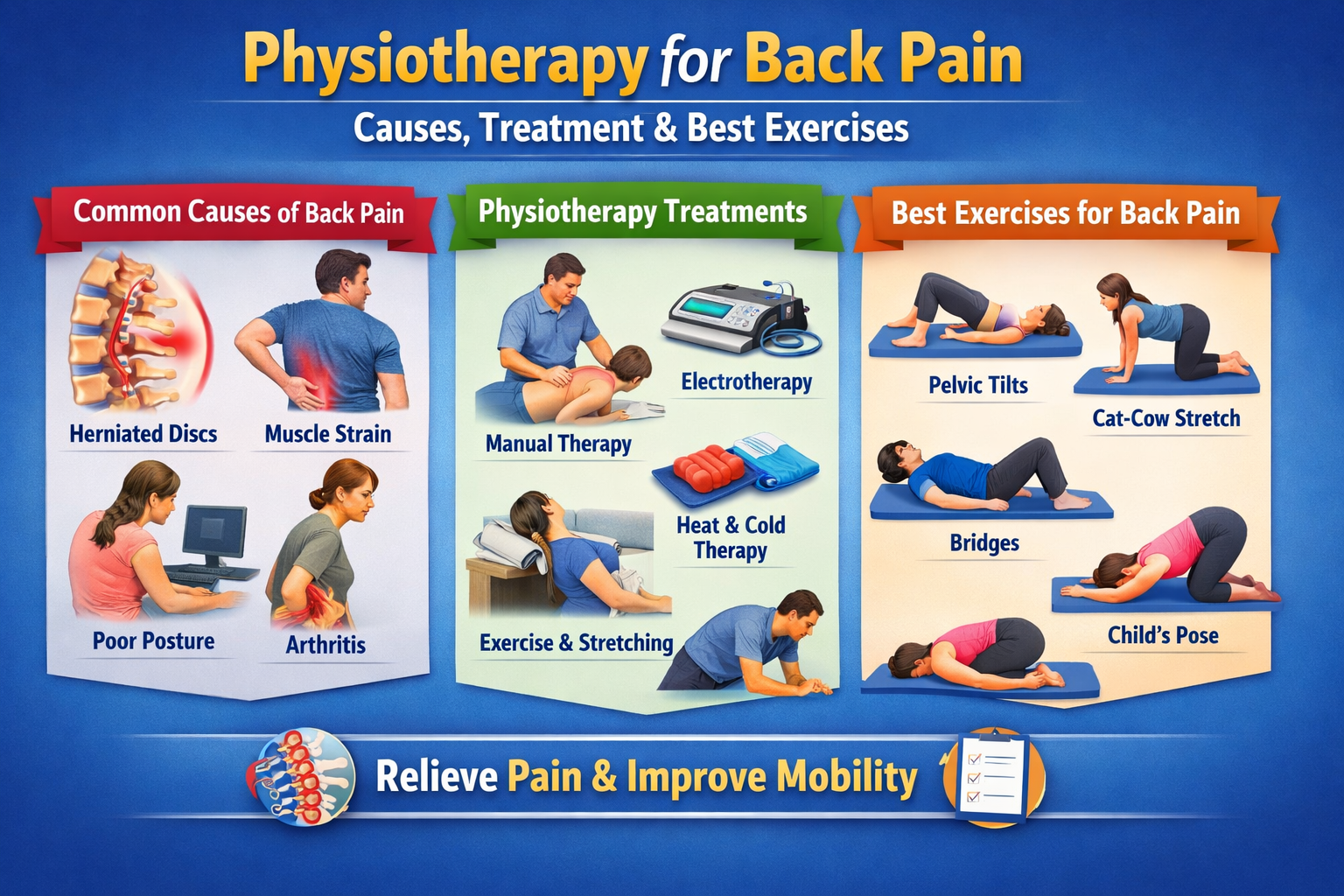
Back pain is a problem that many of us have experienced at some point during our lives. If it’s caused by long hours at work, poor posture, stress or a sudden injury, back pain will gradually become a part of your routine. Things as simple as standing, bending, and even sleeping could cause discomfort. Instead of just relying for onnkillers, a lot of individuals are now opting for physiotherapy for back pain. It targets the root of the problem and not only the symptoms. What Causes Back Pain? Back pain could develop due to various causes. It can start with simple routines we do each day. The most frequent reasons are: If they are not addressed these issues could turn into chronic discomfort. That’s why beginning physiotherapy for back pain is vital. How Physiotherapy Helps Contrary to medications that offer only short-term relief, physiotherapy for back pain is focused on healing over the long term. It helps by increasing flexibility, strengthening muscles that are weak, and correcting posture. A physiotherapist trained in the art of physiotherapy will create the treatment plan that is according to your body’s needs and the level of pain. Regular sessions of physiotherapy for back pain allow you to get more comfortable, lessen stiffness and stop from coming back. It’s among the safest and most efficient methods of recovery in a natural way. Focus on the Lower Back Lower back muscles take the brunt of stress during daily activities, and that’s why it is common for pain to begin there. Lower Back pain physiotherapy can help loosen the muscles that are tight, enhance the spinal support and return the normal motion. In conjunction with physiotherapy for back pain helps you feel healthier and more comfortable within your body. Treatment That Actually Works A common physiotherapy for back pain could consist of: In search of quality care, the back pain treatment in Gurgaon provides accessibility to the most modern facilities and experienced therapists who help you recover in a step-by-step manner. Best Exercises for Lasting Relief The importance of exercise is in the process of the healing process. A few easy chronic back pain exercises include pelvic tilts, stretching from the knee to chest, cat-cow moves and the bridging. They are effective when they are done consistently and aid in strengthening the spine as well as the effectiveness of the physiotherapy for back pain and neck pain. Take the First Step Toward Relief If you’re experiencing back pain that’s making it difficult to enjoy the things you love, don’t let it go unnoticed. Beginning the physiotherapy for back pain right now will allow you to recover more quickly and with no anxiety. To receive expert treatment and personalised care, Gold Medal Physiotherapy is an established name that can help you on your journey to recovery. FAQs When will I be able to feel relief from physiotherapy treatment? To relieve back pain, sufferers notice improvement after just several sessions, typically between 2 and 3 weeks. Does physiotherapy hurt? No. It’s gentle and is made to help people feel better and not more uncomfortable. Does back pain treatment physiotherapy solve problems that are long-term? Yes. It helps in reducing pain and prevents issues from recurring. Do you do back exercises safely at home? Yes, you can, provided that they are directed by a physiotherapist and performed correctly. How can I get treatments for back pain at Gurgaon? Visit Gold Medal Physiotherapy for professional treatment.
It’s a fact that pain is a method of slowing down your pace of life. It doesn’t matter if it’s a stiff neck due to long hours at work, lower back pain due to unnatural posture, or continuous pain in the body; going to a health clinic on a regular basis isn’t always effortless. Long wait times, congestion, and busy schedules frequently cause people to delay seeking treatment. That’s why Chiropractic treatment at home is a straightforward and relaxing option. Instead of scheduling your schedule according to appointments, you could take care of yourself professionally at home. When you receive chiropractic treatment at home. Healing begins wherever you are most comfortable – at home. Why More People Are Choosing Home Chiropractic Care The pace of life today is fast, and many don’t have time or the energy to travel far for treatment. A chiropractic treatment at home reduces tension. There’s no rush, no long waiting times, and there’s no need to travel following treatment. For patients who are older, have mobility issues, are new parents, or are busy professionals, a chiropractic home visit can make care more affordable. This allows patients to concentrate on recuperation instead of dealing with logistical issues. If care is easy to access and comfortable, patients are more likely to stick with their routines, and the consistency of care is crucial in healing. Comfort Makes Healing Easier Living in your living space creates a tranquil atmosphere that allows your body to adapt better to treatments. In your chiropractic treatment at home, the chiropractor will take time to get to know your needs and lifestyle as well as daily practices. The personal care that chiropractors provide is something that many individuals do not receive in the bustling clinics. The treatment typically includes stretching, checks of posture, and muscle relaxation. The use of at-home spinal adjustment methods. The adjustments relieve tension on the nerves, increase the range of motion, and help restore equilibrium in the body. With time, frequent chiropractic treatment at home helps reduce inflammation and prevent the occurrence of pain. Who can benefit from at-home Care? Anyone who is suffering from physical pain could gain from Chiropractic treatment at home. It is particularly beneficial for Regularly scheduled care, chiropractic treatment at home, aids in healing naturally without having to resort to the use of painkillers or surgery. A Simple Step Toward a Healthier Life The choice to make a chiropractic home visit will help you make your health the top priority, without tension. By undergoing regular chiropractic adjustments at home sessions, many experience better posture, fewer migraines, more restful sleep and greater energy. In the end, Chiropractic treatment at home can easily be integrated into your daily routine. It’s not necessary to stop your day to get better. You can simply walk into treatment. At the end of the day, the pain relief experience should be safe, at ease, comforting, and personal. By using expert solutions such as Gold Medal Physiotherapy, you can get quality care where you’re most relaxed – your home. FAQs


Quality Treatment With Super Affordable Price
Call us anytime