Dry Needling Therapy in Gurgaon
Medically reviewed by Dr Riya Jain, BPT/MPT — Gold Medal Physiotherapy
Dry needling is a physiotherapy technique that uses thin, sterile needles to release tight muscle knots (trigger points) and relieve pain. At Gold Medal Physiotherapy, dry needling in Gurgaon is used to treat back pain, neck stiffness, shoulder tightness, headaches, sciatica, and sports injuries — often as part of a broader rehab plan.
Most patients who walk through our door haven’t come looking for dry needling specifically. They come because they’re tired. Tired of pain that returns a few days after every massage. Tired of stretching the same muscle every morning with nothing to show for it. Tired of being told to rest when rest doesn’t seem to be doing anything.
In a lot of these cases, the problem is a trigger point — a tight, knotted section of muscle that won’t release on its own. Dry needling goes straight to it.
Here’s what the treatment actually involves, what conditions it tends to help, and what you can expect if you book a session at our clinic.
What Is Dry Needling Therapy?
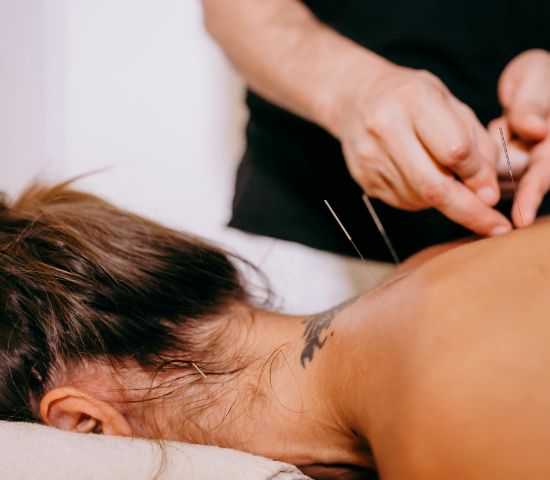
A physiotherapist inserts a thin, sterile needle directly into a trigger point — a knotted area within a muscle that’s causing pain or limiting movement. When the needle reaches that spot, the muscle is prompted to let go of the tension it’s been holding. No medication is used. That’s what “dry” means.
A lot of patients ask whether this is just acupuncture under a different name. It’s not. Acupuncture comes from Traditional Chinese Medicine and works with energy pathways throughout the body. Dry needling therapy is based on Western anatomy — the needle is placed in a specific muscle knot, identified through a hands-on physical assessment. Same tool, completely different logic.
At Gold Medal Physiotherapy, we don’t offer dry needling as a one-off treatment. It’s integrated into a proper plan, because releasing a knot is only part of the job — we also want to understand why it formed.
Conditions We Treat with Dry Needling
Trigger point dry needling is effective for a range of muscular and pain-related conditions. The most common ones we treat:
- Chronic back pain — especially where tight muscles along the spine are part of the problem
- Neck stiffness — often in people who sit at a desk for long stretches or spend a lot of time on screens
- Shoulder tightness — sometimes with pain that travels down the arm
- Tension headaches — frequently tied to knots in the neck and upper shoulder muscles
- Sciatica — where tight muscles are pressing on or irritating the sciatic nerve
- Sports injuries — strains, overuse injuries, and post-activity tightness that just won’t settle
Not sure whether dry needling is right for your specific condition? If you’ve been searching for dry needling therapy near me, the honest answer is: come in for an assessment. We’ll tell you clearly whether it’s a good fit.
Key Benefits of Trigger Point Dry Needling
What makes dry needling useful — particularly for people who’ve already tried other things — is that it can reach muscle knots that massage or stretching alone can’t fully address:
- Rapid muscle pain relief — many patients feel a real difference within the first session or two
- Improved range of motion — once a knot releases, restricted movement often comes back surprisingly quickly
- Accelerated tissue healing — needling increases blood flow to the area, giving the muscle what it needs to recover
- Targeted knot release — instead of working around a deep trigger point, we can get directly to it
One thing worth saying plainly: dry needling is best suited to muscular and myofascial pain. If your pain is coming primarily from a joint, a disc, or a structural issue, it may not be the right approach. We’ll be upfront with you about that.
What to Expect During and After Your Session
If the idea of needles makes you uneasy, knowing exactly what happens tends to help.
During the session: Your physiotherapist will feel for the trigger point before the needle goes in. Once it’s located, a thin sterile needle is inserted through the skin. Most people describe it as a brief, dull ache — not sharp pain. When the needle reaches the knot, you may feel a quick, involuntary muscle twitch. That’s a local twitch response, and it’s a good sign — it means the right spot has been engaged.
After the session: Some soreness in the treated area for a day or two is completely normal. It feels a lot like the muscle fatigue you’d get after a hard workout, and it settles on its own.
A few things that can help during recovery:
- A warm compress on the sore area usually brings quick relief
- Drink a bit more water than usual — it helps the muscle recover
- Avoid putting the treated muscle under heavy load for about a day
- Gentle movement and light stretching, as your physiotherapist recommends, can actually speed things up
Combining Dry Needling with Exercise and Rehab
Releasing a knot during a session solves the immediate problem. But if the underlying cause — a muscle imbalance, a posture habit, a movement pattern that’s been off for years — doesn’t change, the knot tends to come back.
At Gold Medal Physiotherapy, physiotherapy with dry needling is paired with a personalized rehab program. Depending on your condition, that might mean targeted strengthening, posture retraining, or mobility work. For someone with chronic neck stiffness, we’d use needling to release the tight muscles and then address the surrounding muscles that need to get stronger so the pattern doesn’t repeat. The results tend to hold up much better when both pieces are in place.
Take the First Step Toward Lasting Relief
Muscle knots don’t usually resolve on their own — and the longer they’re left, the more they affect daily life. Sleep suffers. Concentration drops. Simple things start to feel like effort.
Dry needling in Gurgaon at Gold Medal Physiotherapy is a direct, evidence-based way to address the source of that pain, backed by a rehab plan that works on keeping it from returning.
If you’ve been dealing with persistent back pain, neck stiffness, tension headaches, or a sports injury that’s overstayed its welcome, book an assessment. We’ll give you an honest read on whether dry needling for back pain or another approach makes more sense for your situation.
-
Is dry needling the same as acupuncture?
No — both use similar needles, but dry needling targets specific muscle knots using Western anatomical principles, while acupuncture is rooted in Traditional Chinese Medicine and works with energy pathways called meridians.
-
Does dry needling hurt?
Most patients feel a brief, dull ache at the point of insertion — not sharp pain — and any local twitch sensation passes within a few seconds.
-
How many dry needling sessions will I need?
Many patients notice improvement within one or two sessions, though chronic conditions may need more as part of a longer physiotherapy plan.
-
What should I expect after a dry needling session?
Mild soreness in the treated area for 24 to 48 hours is normal and typically resolves on its own without any specific treatment.