



Quality Treatment With Super Affordable Price
Best Physiotherapy Treatment India

Call us anytime
Write a mail
It is best to heal when it is integrated into your daily routine rather than the other way around. This is precisely the reason Personalized home physiotherapy in Gurgaon has grown into an effective option for those who are suffering from pain, injuries or issues with movement. Instead of having to rush to a clinic or relying on generic exercises, the patients get treatment specific to their body, health and level of comfort at their own home. The Care You Need is Designed Around You There is no way for everyone to heal differently. The level of fitness, age and medical history, as well as everyday habits, can all be important in healing. Personalized home physiotherapy in Gurgaon is focused on recognising the differences. A physiotherapist examines your mobility, posture, and pain points within your own home and creates an action plan for your needs. Through Personalized home physiotherapy in Gurgaon, sessions don’t have to be rushed. The attention is always given to you, and the treatment will feel more calming than strenuous. The comfort of home, better Health A comfortable environment can help the patient relax. This is crucial for the healing. Personalised home physiotherapy in Gurgaon takes away the stress of long wait periods and overcrowded clinics. A few of the benefits are: That’s why a lot of families are now relying on Home physiotherapy services in Gurgaon for care as well as rehabilitation. A Treatment that Adapts to You as You Grow One of the major benefits of personalised home physiotherapy in Gurgaon is the flexibility. When your health improves, the therapist will adjust practices and exercises to accommodate. The goal is to ensure steady progress, without pushing your body excessively. From joint pain to recovering from surgery to neurological disorders, Customized physiotherapy treatment at home lets therapists modify the routine based on feedback in real time. As time passes, patients typically notice improved mobility, decreased anxiety, and less pain when performing daily activities. Great for seniors and busy Lifestyles Personalised home physiotherapy in Gurgaon gives security and comfort. Therapists are also able to guide relatives and caregivers to make recovery a collaborative effort. Professionals working in the field benefit in the same way. Through flexible scheduling with the Home physiotherapy services in Gurgaon, the therapy can fit into work, meetings and other personal obligations. Selecting the physiotherapy program that offers customized physiotherapy treatment at home ensures no missed sessions and more long-term benefits. A Trusted and Reliable Support Provider Makes the The efficacy of Personalized home physiotherapy in Gurgaon is dependent on the knowledge and expertise of the Therapist. A trusted provider can ensure the proper evaluation, secure methods, and steady improvement. Reputable names such as Gold Medal Physiotherapy concentrate on comfort for patients as well as individualised plans. Expert excellence in delivering an effective and efficient recovery at home. FAQs
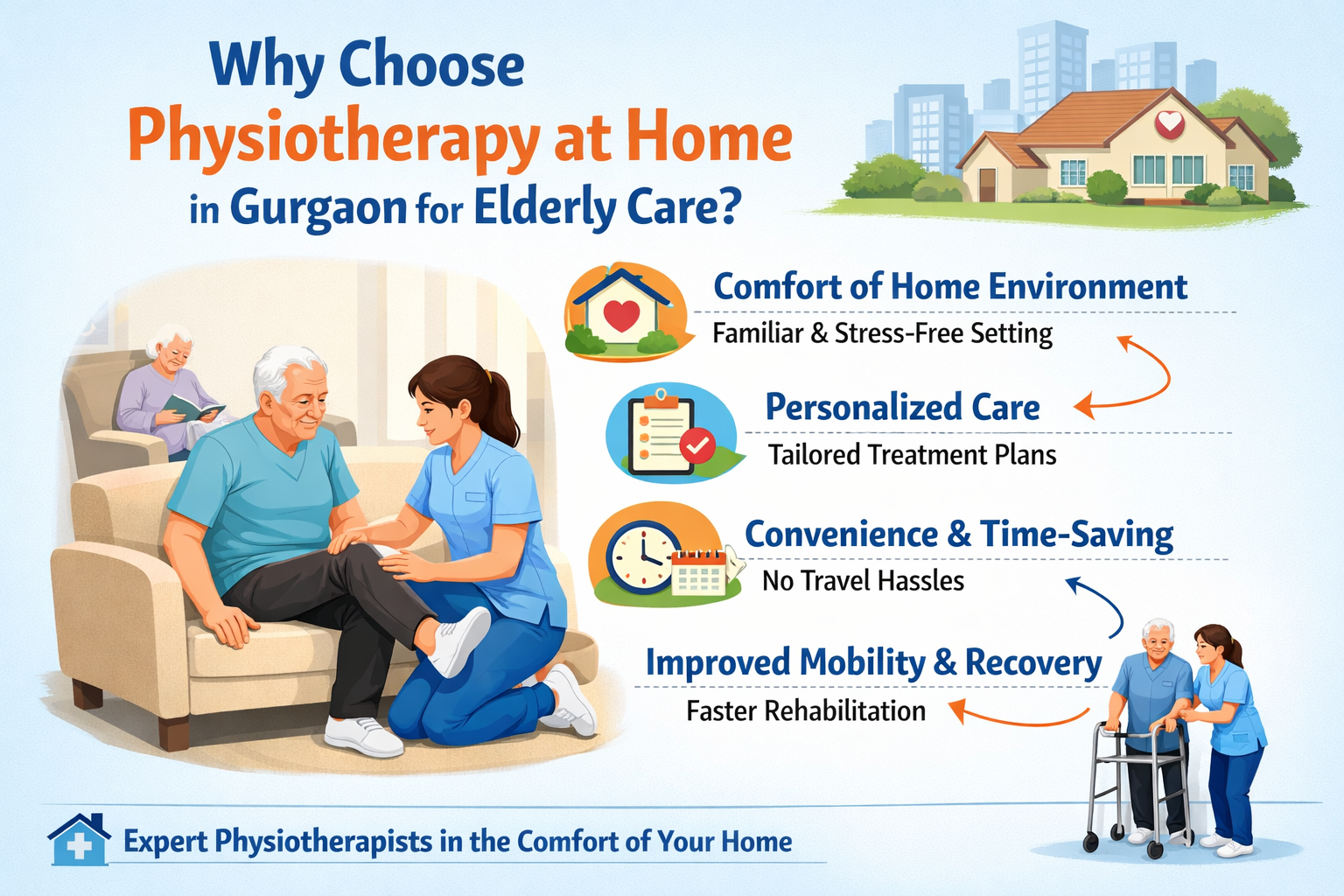
The process of ageing brings a variety of problems. Even the simplest movements can be difficult, and balance can feel unsure. Recovery after surgeries or illness may take longer. Many seniors find that going to a clinic or therapy facility can be stressful and exhausting. That’s why Physiotherapy at Home in Gurgaon is now an ideal option for those in need of treatment. This allows senior citizens to recover within a space in which they are at ease, secure and well-taken care of. Families frequently opt for the Physiotherapy at Home in Gurgaon not only because of convenience, but also because of the security they feel knowing that their loved ones receive expert care with no stress. The Healing Experience is Better At Home The home is where older adults feel most at ease. A familiar environment reduces anxiety and allows them to be more open when they are in therapy. By using the Physiotherapy at Home in Gurgaon, the elderly aren’t forced to endure congestion, busy clinics, or wait for long periods. Treatment at home reduces the risk of falling as well as infections. The added security is among the primary motives why Physiotherapy at Home in Gurgaon is so effective for senior citizens. Caregivers who move at the Senior’s Pace Each person with a disability has their own requirements. One of the greatest advantages of the Physiotherapy at Home in Gurgaon can be the personalised care patients get. Therapists are able to listen attentively and modify exercises based on the level of energy and comfort. Therapy is often used to support: This approach is gentle and individual. Physiotherapy at Home in Gurgaon appears less like therapy but more like a supportive service. Regular therapy without stress It is crucial to maintain consistency for recuperation; frequent travel can result in a missed session. If you choose to do the Physiotherapy at Home in Gurgaon, the elderly tend to adhere to their routine of therapy because it is a natural part of daily activities. Numerous families opt for Home physiotherapy for elderly in Gurgaon due to the fact that it decreases the fear and resistance. In time, frequent sessions can help senior citizens move more as well as feel more energised and gain confidence for everyday tasks. The emotional comfort of your loved ones Physical healing can be most successful when the emotional needs of patients are addressed. Physiotherapy at Home in Gurgaon permits family members to join in, as well as offer support and comprehend the healing process. The support gives seniors the feeling of being loved and encouraged. That’s why Elderly care physiotherapy services Gurgaon have become increasingly sought-after by those who want compassion, lasting services and not just short-term solutions. Easy, practical and time-saving A lot of people think that it’s expensive to go home for therapy; however, the Physiotherapy at Home in Gurgaon can usually save money and also time. There is no cost for travel, there’s no wait time, and the treatment is focused on one individual patient. If you are looking for who can trust Home physiotherapy for elderly in Gurgaon, sessions are a great way to provide both comfort and top-quality treatment. Selecting the Best Assistance for Seniors Finding a reliable service supplier of Physiotherapy at Home in Gurgaon is essential. Professionals with experience offering Elderly care physiotherapy services Gurgaon are focused on patient safety and improvement over time. Names that are trusted like Gold Medal Physiotherapy are well-known for their respectable professional, efficient physiotherapy at home. It helps elderly patients with respect and respect. FAQs
The discomfort of neck pain is something nearly all of us experience at one point or another. It could be from working at your desk for hours on end and constantly looking at your mobile, or an insecure posture; the discomfort can be extremely frustrating. It’s good to know that home physiotherapy for cervical pain can be done at home, and you can receive professional treatment at home without having to leave your home. The relief you feel can begin from the comfort of your home. Why Cervical Pain Happens The pain in the cervical region isn’t only “normal neck stiffness.” It could result from a variety of causes, like: While painkillers are helpful temporarily but they aren’t able to solve the issue. This is why cervical spondylosis physiotherapy at home is extremely effective. It addresses the root of the issue and aids in regaining flexibility and strength. Benefits of Neck Pain Physiotherapy at Home The choice to seek neck pain physiotherapy at home offers several benefits: What Can You Expect From the Home Cervical Pain Treatments A certified physiotherapist can use various treatments to aid you in recovering by providing: This method ensures that the cervical pain treatment at home can be not only efficient, but it is also customized to meet your specific needs. Why You Should Hire a Physiotherapist for Neck Pain at Home A professional physiotherapist for neck pain at home is essential as they will ensure that your treatment is carried out correctly and safely. They aid in reducing the stiffness, ease pain as well as improve mobility and avoid flare-ups in the future. The ability to learn exercises from a professional is also a way to continue the exercises safely by yourself. Conclusion If neck pain has a negative impact on the way you live, at-home rehabilitation can change your life. It’s easy, secure and can help treat the underlying cause instead of simply masking the discomfort. If you want expert guidance and personalised treatment at your fingertips, Gold Medal Physiotherapy is the best choice. FAQs


Quality Treatment With Super Affordable Price
Call us anytime