



Quality Treatment With Super Affordable Price
Best Physiotherapy Treatment India

Call us anytime
Write a mail
A stiff neck, a shooting shoulder and a dull, throbbing headache can be a nightmare for those suffering from cervical spondylosis. The degeneration of the discs that line your neck isn’t only a nuisance during your day-to-day activities; it can also disrupt your sleep. As we spend three-quarters of our time at night, learning how to sleep with cervical spondylosis is among the most efficient techniques to ease the pain and restore your enjoyment of living. For expert guidance and treatment, explore our cervical spondylosis treatment in Gurgaon . The trick is maintaining the alignment of your spine. When your neck isn’t well secured, the natural contour of the cervical vertebrae is flattened or bent awkwardly, causing nerves to be pulled tight and muscles to strain. The Best Sleeping Position for Cervical Spondylosis In terms of reducing the strain on your neck, no positions are made equally. Most experts believe that two main positions help maintain the spine in a relaxed, neutral posture. 1. Back Sleeping (The Gold Standard) In the majority of cases, sleeping on your back is the best sleeping position for cervical spondylosis. A comfortable back position spreads the body’s weight out and permits your head, cervical spine, and neck to relax in a neutral position. 2. Side Sleeping (The Comfortable Alternative) If you can’t sleep on your back, side sleeping is an excellent alternative–provided it is done correctly. The Worst Position: Avoid Stomach Sleeping If you’re trying to find the best cervical spondylosis sleeping posture, the first rule is to avoid sleeping on your stomach. Sleeping on your stomach makes you turn your head towards one side during the course of a long time in order to breathe. The cervical spine is twisted and compresses joints, significantly increasing the severity of spondylosis. Practical Tips: How to Sleep with Cervical Spondylosis Comfortably The transition to a different sleeping position is a process that takes time. Utilise these suggestions from experts to improve your sleep routine You can rest easy and sleep well with the help of experts Achieving a perfect cervical spondylosis sleeping posture is an ideal start; however, the adjustments you make at night are just part of the equation. Long-lasting relief is dependent on a thorough method that focuses on neck flexibility, strength, joint decompression and more. If you’re trying to achieve lasting relief from neck pain for years, the team of specialists in Gold Medal Physiotherapy can assist you. Our physiotherapists with years of experience design customised treatment plans that incorporate the latest techniques in manual therapy as well as targeted exercises that relieve tension on the cervical spine. Do not let neck pain ruin your ability to sleep for another night. Contact Gold Medal Physiotherapy today for a consultation and begin your journey towards a pain-free night’s sleep! FAQsDoes changing my sleeping posture actually ease neck strain?Yes! A good sleeping posture reduces tension on your neck and helps reduce discomfort. What kind of pillow will work best?A middle-firm memory foam, or a cervical pillows that support the curve of your neck naturally. What can I do to stay on the right side of my body all night?Try to stay in your desired place, although small adjustments occur as is typical. Consistency is the key to success. Are side sleepers better than sleeping back?Back sleeping is the most popular choice, but sleeping on your side is an excellent alternative when you choose the appropriate assistance. Do you think that sleep alone can fix neck spondylitis?Sleep can help manage pain, but physical therapy is essential for neck well-being.
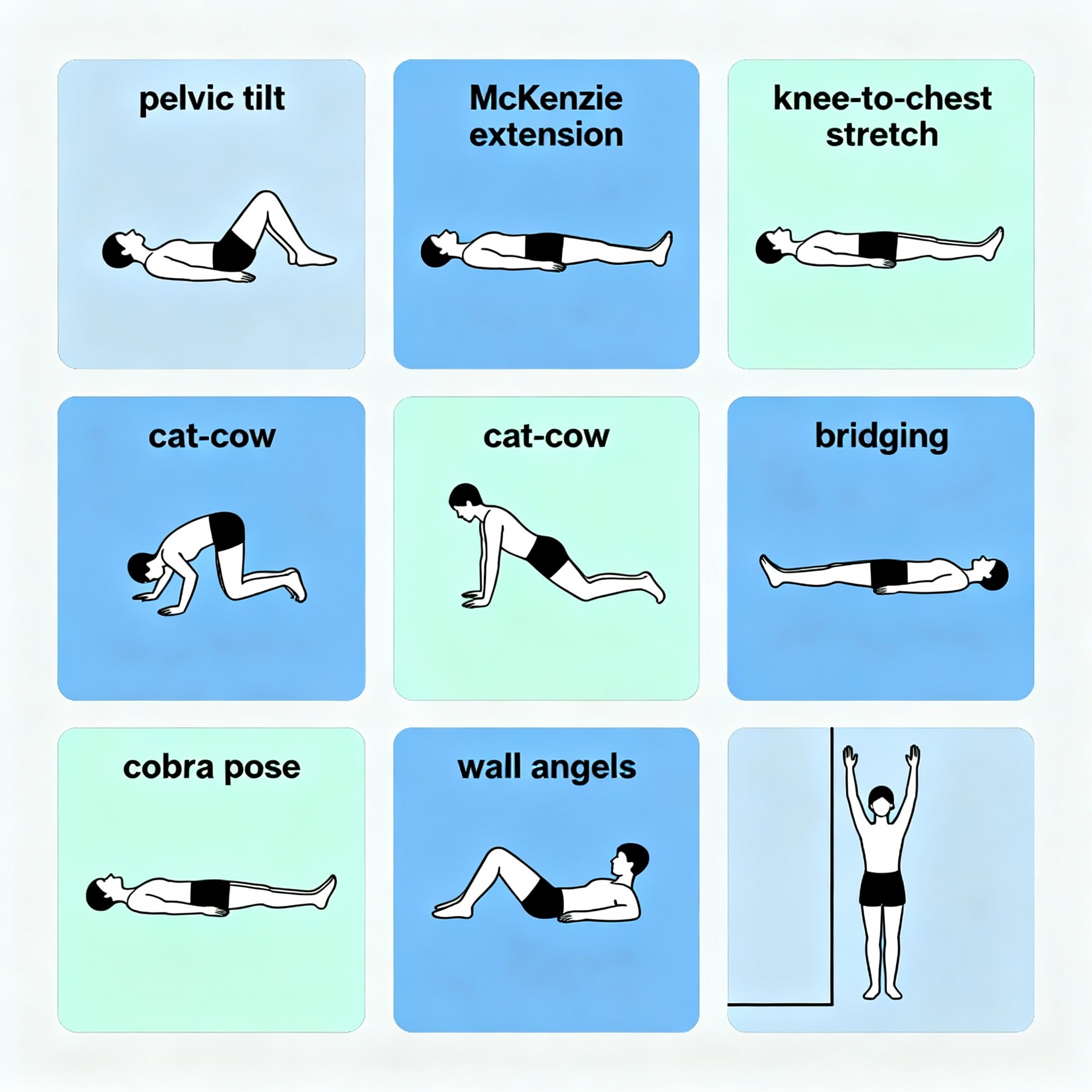
A disc injury could be a source of pain, frustration and can limit your day-to-day actions. If it’s creating painful lower back pain that is sharp as well as numbness and discomfort during sitting, walking or lifting weights, there’s a good chance that physical therapy exercises could make a big impact. Exercises that are done correctly can not only ease pain, but they also increase the flexibility of your spine and help prevent future injuries. Below are seven of the most beneficial physiotherapy exercises to help treat a damaged disc. 1. Pelvic Tilt – Strengthen Your Core Relax on your back and lie down with your knees bent and feet on the floor. Engage your abdominal muscles to tighten them, and then gently push your lower back to the floor. Keep it for 5-10 seconds and then release.This simple move strengthens your core muscles that can support your lower back and ease stress on the disc. 2. McKenzie Extension – Reduce Pressure on the Disc Lie on your stomach, and rest your elbows on your shoulders. Then slowly lift your upper body with your legs to the floor. Do this for several minutes before lying down.This exercise assists in removing the disc from the nerves, relieving the pain and increasing flexibility. 3. Knee-to-Chest Stretch – Ease Lower Back Tension Relax on your stomach and gently move one knee towards your chest, while keeping the other leg bent or straight. For about 15-20 seconds, before switching the sides.This stretch loosens muscles tight within your lower back. It aids in decompressing your spinal region. 4. Cat-Cow Stretch – Improve Flexibility Put your hands on your knees. Then, you can arch your back like a cat, and then lower your stomach in while raising your head up like the head of a cow. Repeat this 10 to 15 repetitions.It’s an easy way to increase spinal flexibility as well as ease stiffness. 5. Bridging Exercise – Strengthen Glutes and Back Lie on your back, with your knees bent. Lift your hips so that your body is in an even line from your knees to your shoulders. Keep it for a couple of minutes and then lower it gradually.Strong glutes and lower back muscles assist the spine and reduce tension on the disc. 6. Cobra Pose – Open Up the Back Lie on your stomach, and rest your palms on your shoulders. Keep your chest elevated while keeping your legs on the ground. Keep it for 10 to 15 minutes.This gentle forward bend relieves nerve pressure and improves posture as time passes. 7. Wall Angels – Improve Posture and Upper Back Strength Sit with your back against an object, with your elbows bent to 90 degrees. Then slowly move your arms upwards and down, like forming a snowman, while maintaining close to your wall.Wall Angels help strengthen the upper back muscles as well as improve posture, while decreasing the stress that will be placed on your spine. Takeaway The recovery process from slipped disc is a process that requires perseverance, persistence, and the right direction. Doing these exercises consistently under the supervision of a professional can ease pain, strengthen your back, and help prevent the possibility of future back pain. The staff at the Gold Medal Physiotherapy, the experts, create programmes to suit your particular condition by combining manual therapy with exercises and expert guidance to aid you in recovering faster and in a safe manner. FAQs Are the exercises in my home for me?Yes, however, you should get a physiotherapist’s help in order to make sure you’re doing the right thing as well as to prevent aggravating your health. What’s the average time for recovery typically take?It is different, however, most patients will see improvements in the course of 6-12 weeks after consistent physiotherapy. Do these exercises work for all discs that have slipped?Not necessarily. The exercises should be adapted based on the area and severity of the disc’s injury. Do I need to use cold or hot water after exercise?Ice can help reduce inflammation in the initial stages. On the other hand, heating relaxes muscles that are tight during recuperation.Does physiotherapy help prevent the occurrence of discs that have slipped discs?Yes. The strengthening of your core, improving the posture of your spine, and also maintaining condition can prevent the recurrence of disc injuries.
The impact of a spinal injury (SCI) could alter your life quickly, affecting mobility as well as sensation and the ability to function. The path to healing might seem overwhelming, but it’s possible to start early and take action. One of the strongest methods to regain control and self-confidence following an injury to the spine is an early period of physical therapy. The first time you begin therapy after stabilisation with medical treatment can make an enormous difference in the restoration of the function of your body, eliminating complications, building strength both physically as well as emotionally. 1. Stopping Problems Before They Begin In the aftermath of a spinal accident, inactivity can lead to a variety of additional issues like the sores of muscle atrophy, muscle stiffness and circulatory issues. Physiotherapy early on can keep these from becoming a problem. By focusing on gentle exercises, guided moves, and the correct positioning, therapists can keep joints elastic, muscles and blood flow. The early treatment lays the foundation for faster and more secure recovery later. 2. The Body can help it reconnect to the Brain The connection between the body and brain makes it difficult for muscles to perform the movements they ought to. The initial physiotherapy focus is on training the neural pathways. Therapists utilise exercises that stimulate neurostimulation, enhance coordination, and gradually return control of movements. This process–called neuroplasticity–allows the nervous system to adapt and relearn, giving the body its best chance at recovery. 3. Keeping the Heart and Lungs Strong If mobility is restricted, the respiratory and cardiovascular functions may decline swiftly. Physiotherapy early on helps to keep these systems in good shape through moderate aerobic exercises, intense breathing exercises and exercise for posture. Invigorating the heart and lungs is not just beneficial for healing, but also improves general energy and endurance, making daily tasks easier when recovery is progressing. 4. Building Confidence and Mental Strength The psychological aspect of recovery is equally important as physical. In the aftermath of a spinal accident, there are many who struggle with fears and frustration or even uncertainty. The physiotherapy program provides a routine that shows visible improvement, as well as an euphoria of achievement. Each small step-up–like sitting or lifting a limb or even standing — brings back confidence. The mix of emotional and physical support helps patients to stay focused and hopeful. 5. Regaining Independence, One Step at a Time The main aim of physiotherapy is the attainment of independence. Initial sessions are designed to assist patients in relearning daily tasks like sitting, balancing and transferring from a chair to bed. As coordination and strength improve and confidence increases, so do the skills for handling daily activities. As time passes, regular therapy could help individuals get back to their work or social lives as well as the leisure hobbies they previously enjoyed. In conclusion The process of obtaining physiotherapy as soon as you’ve suffered a spinal cord injury doesn’t mean just moving around, but also offering yourself the highest possible chance of recovering both physically and emotionally. By utilising professional advice, perseverance, getting back to independence is made easier and more feasible. In the Gold Medal Physiotherapy Expert, professionals are specialised in spinal injury rehabilitation. They provide individualised treatments that are focused on the early healing process, as well as long-term fitness, general health and quality of life. Frequently Asked Questions (FAQs) When should physiotherapy commence following a spinal cord accident?It typically begins when the patient’s health is stable. Sometimes, it can be as little as a few days with a doctor’s supervision. Does early physiotherapy help end paralysis?Full recovery is contingent on the injury’s degree of severity. However, early treatment greatly improves balance, mobility and self-confidence. What can you expect during your initial sessions of physiotherapy?Initial sessions consist of gentle movement as well as breathing exercises, and stretching exercises to reduce stiffness and improve circulation. Do physiotherapy sessions hurt following an injury to the spinal cord?Sessions can be adjusted according in accordance with your personal comfort. Therapists take care to prevent injury while also encouraging safe progress. How long will rehabilitation for a spinal injury take?Recovery is different for every patient; however, consistent physiotherapy — often over several months, or more–will result in the greatest possible results.


Quality Treatment With Super Affordable Price
Call us anytime