



Quality Treatment With Super Affordable Price
Best Physiotherapy Treatment India

Call us anytime
Write a mail
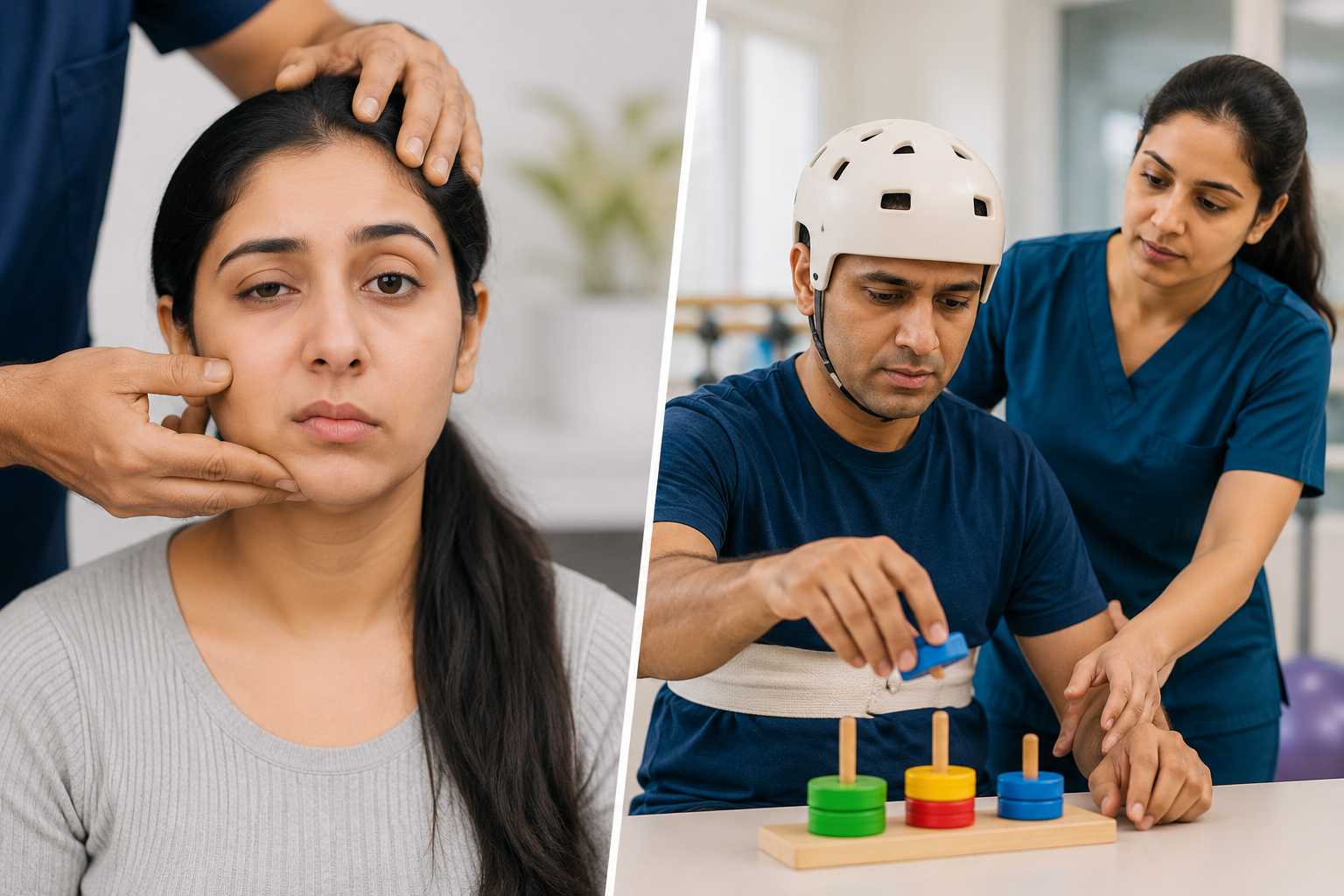
Brain injury doesn’t announce itself. One moment someone is driving to work or playing with their kids — the next, they’re trying to figure out how to get from the bed to the bathroom without help. I’ve worked with families who were completely unprepared for how sudden that shift can be, and how long the road back actually is. Physiotherapy treatment after brain injury Gurgaon is one of the few interventions that directly addresses what patients struggle with in their daily lives — not just on paper, but in practice. The brain does retain some capacity to reorganize after injury. Patients who begin structured movement therapy within 72 hours of stabilization tend to show better gait outcomes at six months compared to those who start later. That window matters more than most people realize. A good treatment plan has to be built around the actual injury — where the damage is, what motor function remains, and what the person genuinely needs to do at home. This article covers how physiotherapy addresses mobility deficits, balance problems, paralysis, and facial nerve conditions like Bell’s Palsy, with a focus on specialized care available in Gurgaon. What Is Traumatic Brain Injury Physiotherapy Gurgaon? Traumatic brain injury (TBI) physiotherapy in Gurgaon focuses on restoring function after head trauma — road accidents and falls make up the majority of cases, though sports injuries and assaults are also common. Severity varies enormously from one patient to the next, and the rehab approach has to reflect that rather than follow a one-size-fits-all script. Assessment always comes first. A neurological physiotherapist evaluates muscle strength, postural control, coordination, and basic transfer ability before building any program. Typical components include: Starting traumatic brain injury physiotherapy in Gurgaon during the acute or subacute phase significantly cuts the risk of secondary complications. Muscle contractures are among the most preventable problems in early recovery — and among the most limiting when they’re allowed to set in. How Does Physiotherapy Treatment After Brain Injury Gurgaon Work? Rehab after brain injury isn’t a fixed protocol. Physiotherapy treatment after brain injury in Gurgaon moves through phases, and what makes sense in week one looks very different from what’s appropriate in month three. Acute-phase work is conservative — positioning to manage muscle tone, passive limb movements, respiratory support where needed. Once the patient can actively participate, the focus shifts to functional retraining. A structured physiotherapy treatment after brain injury in Gurgaon typically includes: Clinics handling patients with both significant cognitive and motor deficits need therapists who understand both. A purely movement-focused approach misses too much of what’s actually going on. What Does Paralysis Physiotherapy Treatment in Gurgaon Involve? Paralysis after brain injury can range from a weakened hand to full hemiplegia on one side of the body. Where the damage sits in the brain largely determines what motor function remains — and what the realistic rehabilitation target should be. Paralysis physiotherapy treatment in Gurgaon prioritizes preserving joint range, activating whatever motor pathways remain, and building the most functional independence possible given the clinical picture. Core techniques include: Some patients regain significant motor function within three to six months. Others plateau earlier. Ongoing paralysis physiotherapy treatment in Gurgaon still holds real value at that stage — it maintains joint health and manages the secondary complications that follow prolonged inactivity. How Is Bell’s Palsy Physiotherapy Gurgaon Different from Other Treatments? Bell’s Palsy isn’t usually a direct result of TBI — it involves acute facial nerve inflammation, most often linked to viral reactivation. It does appear alongside other neurological presentations in some patients, though, and the rehab approach is worth understanding clearly. Mild cases sometimes resolve without formal intervention. Moderate-to-severe palsy is a different situation entirely. Bell’s Palsy physiotherapy in Gurgaon focuses on: Symptoms that persist beyond three weeks warrant a referral to someone experienced in facial nerve rehabilitation. Synkinesis — where facial muscles fire involuntarily together, like the eye closing when you smile — is significantly harder to address once it’s established. Early Bell’s Palsy physiotherapy in Gurgaon from a qualified specialist gives patients a much better chance at a symmetrical recovery. Taking the Next Step Toward Recovery Recovery from brain injury is measured in months, sometimes years. What I’ve seen consistently is that the severity of the initial injury matters less than most people expect — the quality and consistency of what follows counts just as much. A treatment plan built around a patient’s actual deficits and real daily needs will always outperform a generic protocol. Gold Medal Physiotherapy provides specialized care in Gurgaon for traumatic brain injury, paralysis, and Bell’s Palsy, with programs built around individual patient goals. Visit the Gold Medal Physiotherapy website to explore their services and book an initial assessment.
We’ve seen athletes walk into a clinic six weeks post-surgery convinced they’re “almost there,” only to find their quad is firing at 60% of the healthy side. ACL Injury Physiotherapy Treatment in Gurgaon isn’t just about getting someone back on their feet — it’s about getting them back to sprinting, cutting, and competing without that creeping fear of the knee giving way again. Gurgaon has developed a genuine concentration of sports physiotherapy clinics capable of handling these cases well. A club-level badminton player and a semi-professional football midfielder will have different demands, different timelines, and different risks. Knowing what recovery actually looks like — phase by phase, milestone by milestone — puts you in a far better position to choose where you get treated and how hard to push. Sports Physiotherapy Treatment in Gurgaon Sports physiotherapy treatment in Gurgaon has matured significantly over the past decade, partly because athletes have stopped accepting generic care and started asking better questions. Sports physiotherapy isn’t just musculoskeletal physiotherapy with a different name. It’s built around athletic movement mechanics, sport-specific load demands, and what it actually takes to perform at intensity without breaking down. When a sports physiotherapist looks at your knee, they’re really looking at your whole lower limb chain. Key factors they assess include: Treat the knee in isolation and you’re leaving the door open for the same injury to happen again. A solid clinic offering sports physiotherapy treatment in Gurgaon will use manual therapy alongside exercise prescription that’s calibrated to your current load tolerance — not a fixed protocol pulled from a textbook. And they’ll explain what you can and can’t do at each stage, and why. If a clinic hands you a printed sheet of exercises and waves you out the door, that’s not sports rehab. ACL Injury Physiotherapy Treatment In Gurgaon ACL injury physiotherapy treatment in Gurgaon follows a phased structure regardless of whether you’ve had surgical reconstruction or you’re taking the conservative route. What matters is that each phase has objective exit criteria. You advance when you hit measurable benchmarks — not just when a certain number of weeks have passed on the calendar. In the first four to six weeks, the focus is on: After that comes strength work and neuromuscular re-education. Single-leg squat progressions, lateral band loading, and proprioceptive drills on unstable surfaces help rebuild the brain-to-joint control that the injury disrupted. Most orthopedic sports medicine protocols set 90% limb symmetry on isokinetic strength testing as the threshold before cutting or jumping drills are introduced. For ACL reconstruction patients, that benchmark typically falls somewhere between months six and nine — though graft type, pre-injury fitness, and how consistently the early phases were managed all shift that window. Don’t let anyone clear you for sport based on how the knee “feels.” Ask for the hop test scores. Ask for the isokinetic data. Ligament Injury Physiotherapy Gurgaon Ligament injury physiotherapy in Gurgaon isn’t all ACL cases. The knee has four major ligaments — ACL, PCL, MCL, and LCL — each resisting different directional forces. Damage to any of them changes joint loading patterns and movement quality in ways that don’t always show up as obvious instability during daily activity but become very obvious at sport intensity. MCL injuries, particularly Grade I and II sprains, often recover without surgery. A well-structured program with appropriate bracing and graded loading can return lower-grade MCL injuries to sport in four to eight weeks. PCL cases need more caution early on — resisted knee flexion has to be limited in the initial weeks to avoid pulling the tibia posteriorly while the ligament is still healing. Grading matters more than most patients realize. Here’s a quick breakdown of what each grade typically means for your program: Ask your physiotherapist to explain your injury grade clearly, what it means for your recovery window, and what you’ll need to demonstrate before each phase advances. Best Sports Physiotherapist in Gurgaon Identifying the best sports physiotherapist in Gurgaon comes down to whether they can actually speak to your sport and your specific injury — not just knee injuries in general. Some practical things to look for: For competitive athletes, coordinated care between the physiotherapist, orthopedic consultant, and coaching staff makes a real difference at every transition point in rehabilitation. When those three parties aren’t talking to each other, decisions get delayed and important clinical signals get missed. Return to Sport: The Final Phase Return-to-sport clearance isn’t one conversation — it’s the result of several tests taken together. Hop tests measure functional power and confidence. Isokinetic assessments quantify how close the injured leg is to the healthy one. Tools like the ACL-RSI scale screen for fear of re-injury, which research consistently shows is one of the strongest predictors of whether an athlete will actually perform at full intensity once cleared. Sport-specific drills need to be introduced progressively and under observation before an athlete steps back into live competition. A sensible return-to-sport progression typically looks like this: Athletes who skip that intermediate step and go straight from gym work to full-contact training have measurably higher re-injury rates in the first season back. Pressure to return early — from coaches, club commitments, or the athlete themselves — should never override objective data. The best physiotherapists we’ve seen hold that line even when it’s uncomfortable. Your Path Back to the Game ACL and ligament recovery doesn’t move in a straight line. Some phases go faster than expected. Others stall and need reassessment. Setbacks happen, and they’re not necessarily signs that something is wrong — often they’re just the program catching up with where the tissue actually is. Most athletes who go through a well-structured rehabilitation program do return to their sport. Many come back with better movement quality than they had before the injury, because rehab forces a level of body awareness that regular training rarely demands. If you’re working through a knee injury and want structured, evidence-based care in Gurgaon, visit the Gold Medal Physiotherapy website to learn more about
If you’ve spent months treating the wrong problem — trying rest, painkillers, or a generic exercise routine from YouTube — you’re not alone. Lower back pain is one of the most common musculoskeletal complaints people seek help for, and it’s also one of the most frequently mismanaged. For anyone considering back pain physiotherapy in Gurgaon, the question isn’t just “does your back hurt?” — it’s whether that pain is mechanical, whether a nerve is involved, and if so, which one and why. If you have sciatica, you need a very different approach from someone with straightforward back pain. Applying standard back pain protocols to a compressed sciatic nerve can actually make things worse. And if you’re dealing with lumbar spondylosis that’s been progressing quietly for years, you need a long-term management mindset, not a six-session discharge plan. Here’s how to tell these conditions apart and what good physiotherapy actually looks like for each. Back Pain Physiotherapy Gurgaon – Causes and Symptoms “Back pain” isn’t a diagnosis. It’s a description — a catch-all that can mean anything from a strained erector spinae to a misfiring facet joint to a disc that’s slowly drying out. That ambiguity is part of what makes it so difficult to treat without a proper assessment. Prolonged sitting loads the lumbar discs with standing pressure. That’s why desk workers and drivers are so commonly affected. Muscle imbalances, poor lifting mechanics, and weak deep stabilizers all contribute — but your context matters enormously. A 28-year-old who spends 10 hours a day at a laptop has a different problem from a 55-year-old who’s been lifting heavy loads for decades. Symptoms that typically suggest mechanical back pain: Back pain physiotherapy in Gurgaon starts with a thorough movement screen — not a questionnaire, but an actual physical assessment. Joint mobilization, targeted core activation (usually beginning with dead bugs or transverse abdominis work before moving to load-bearing exercises), and a proper ergonomic review are the foundations. If you address both the clinical and occupational sides of the problem, you’re far more likely to see genuine improvement within two to four weeks, rather than cycling through flare-ups indefinitely. If your pain stays above the knee and there’s no change in bladder or bowel function, conservative physiotherapy is the right starting point almost every time. Sciatica Physiotherapy Treatment in Gurgaon – What You Need to Know Sciatica isn’t just bad back pain. The sciatic nerve — originating from the L4/L5 or S1 nerve root, running through the piriformis region, and tracking down the leg — produces a very specific symptom pattern when it’s compressed or chemically irritated. You might describe it as electric, burning, or like a hot wire running down your leg. That language alone is clinically telling. What sciatica actually looks like: Sciatica physiotherapy treatment in Gurgaon is built around decompressing the nerve root and correcting the source of irritation. Clinically, that includes neural mobilization techniques such as sciatic nerve flossing, lumbar traction where appropriate, and progressive core loading to reduce the mechanical pressure contributing to compression. Cold packs in the acute phase before introducing deeper manual work is a standard sequencing choice — the inflamed nerve tissue needs that initial window. Here’s the part that gets skipped too often: sciatica is a symptom, not a standalone condition. If your assessment doesn’t identify whether the driver is a herniated disc, piriformis syndrome, or lumbar stenosis, the treatment plan is guesswork. Treating the leg pain without addressing its source means you improve temporarily, then find yourself back at square one three months later. Slip Disc Physiotherapy Gurgaon – Diagnosis and Treatment A herniated disc — what most people call a slip disc — occurs when the nucleus pulposus pushes through a fissure in the outer annulus. At L4/L5 or L5/S1, the two most common lumbar levels, this puts direct pressure on a nerve root. The resulting symptoms follow a predictable dermatomal pattern, which is actually useful diagnostically. Signs that point toward disc herniation rather than simple muscle strain: A herniation can be clinically suspected, but you can’t confirm the level or rule out other pathology without an MRI. Once you have imaging, slip disc physiotherapy in Gurgaon is the appropriate first-line response for mild to moderate herniations. Surgery enters the conversation only when there’s progressive neurological loss or bowel and bladder involvement — a small minority of cases. Treatment moves through stages. Early on, the focus is pain management using positions of comfort and gentle isometric work. As irritability settles, McKenzie-based extension exercises or lumbar traction may be introduced if your disc responds to centralization. Later, progressive spinal stabilization — bird-dog, dead bug, partial bridges — builds the support structure the disc needs to stay protected under load. If you work through this consistently without rushing the progression, you have a strong chance of avoiding surgery even with a confirmed herniation. Lumbar Spondylosis Physiotherapy Gurgaon – Managing a Chronic Condition Lumbar spondylosis is age-related wear — disc desiccation, osteophyte formation, facet joint arthritis. It shows up on MRI in most adults over 50, which is worth keeping in mind when interpreting scans. Imaging findings and pain levels don’t always correlate. Some people have significant degenerative changes on MRI and function well; others have relatively mild changes but are severely limited. The scan tells you the anatomy; it doesn’t tell you the full story. What the symptom picture tends to look like: Lumbar spondylosis physiotherapy in Gurgaon isn’t about reversing degeneration — that’s not possible. The realistic goal is meaningful symptom control, preserved function, and slowing further decline through appropriate load management. Low-impact aerobic conditioning (hydrotherapy or cycling both reduce joint stress while maintaining cardiovascular load), targeted spinal mobility work that avoids provoking nerve symptoms, and strength training for the glutes and paraspinals are the practical cornerstones of long-term management. If you treat this as a short course of physio and then stop exercising, symptoms almost universally return within months. This condition rewards consistency over intensity. Getting the Right Diagnosis Matters Overlapping symptoms


Quality Treatment With Super Affordable Price
Call us anytime